
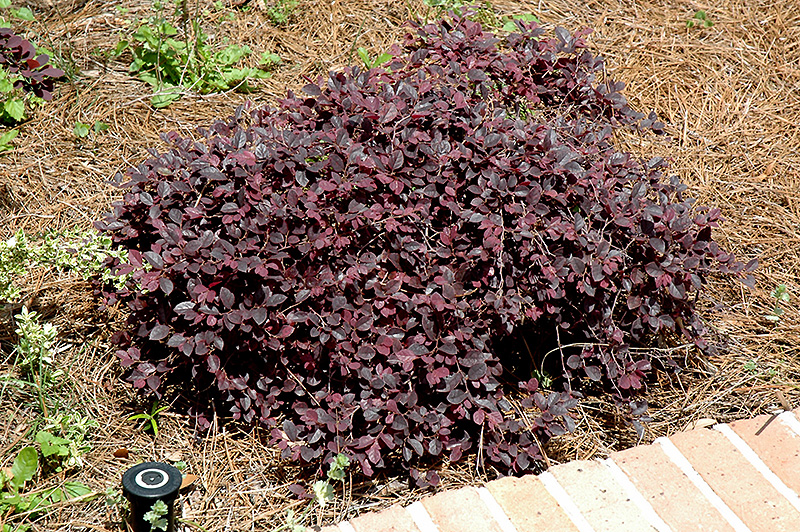
Bill Wallace Fringeflower
Description
Eye-catching hot-pink colored fringed flowers are heaviest in spring on this very low, spreading variety, but repeat throughout the year, foliage emerges reddish, and matures to deep burgundy; a colorful groundcover, or great spilling over walls
Landscape Attributes
Bill Wallace Fringeflower is a multi-stemmed evergreen perennial with a ground-hugging habit of growth. Its relatively fine texture sets it apart from other garden plants with less refined foliage.
Bill Wallace Fringeflower is recommended for the following landscape applications;
Planting & Growing
Bill Wallace Fringeflower will grow to be about 12 inches tall at maturity, with a spread of 4 feet. Although it is technically a woody plant, this fast-growing plant can be expected to behave as a perennial in our climate if planted outdoors over the winter, usually regrowing from its base (crown) the following year. As such, gardeners should take into consideration that it will perform differently than it would in its native habitat.
This plant does best in full sun to partial shade. It does best in average to evenly moist conditions, but will not tolerate standing water. It is particular about its soil conditions, with a strong preference for rich, acidic soils. It is somewhat tolerant of urban pollution. Consider applying a thick mulch around the root zone in winter to protect it in exposed locations or colder microclimates. This is a selected variety of a species not originally from North America.
Bill Wallace Fringeflower is a fine choice for the garden, but it is also a good selection for planting in outdoor pots and containers. Because of its spreading habit of growth, it is ideally suited for use as a 'spiller' in the 'spiller-thriller-filler' container combination; plant it near the edges where it can spill gracefully over the pot. Note that when growing plants in outdoor containers and baskets, they may require more frequent waterings than they would in the yard or garden. Be aware that in our climate, this plant may be too tender to survive the winter if left outdoors in a container. Contact our experts for more information on how to protect it over the winter months.