
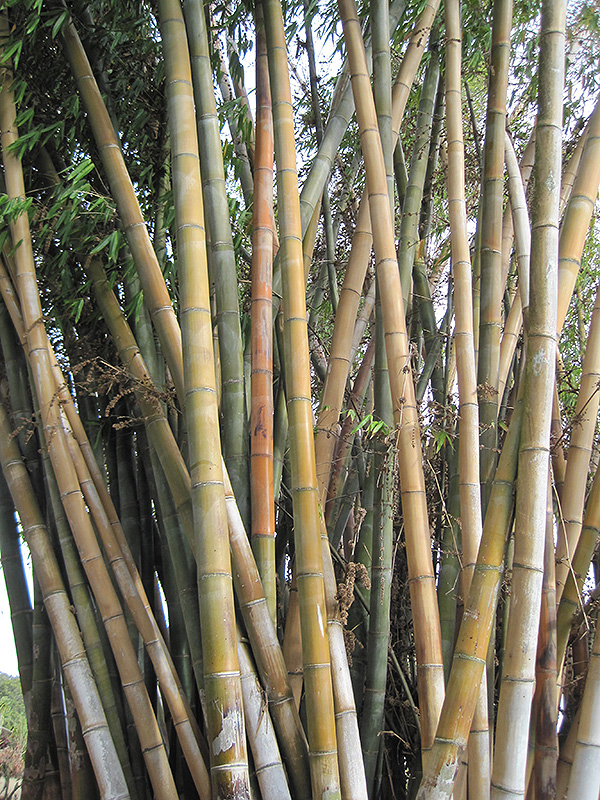
Giant Bamboo
Description
A graceful and tall species of bamboo, with a clumping habit of growth and gray-green culms that mature to orange-yellow as they age; one of the largest timber bamboos, so allow plenty of room
Landscape Attributes
Giant Bamboo is a dense herbaceous evergreen perennial with a rigidly upright and towering form. It brings an extremely fine and delicate texture to the garden composition and should be used to full effect.
Giant Bamboo is recommended for the following landscape applications;
Planting & Growing
Giant Bamboo will grow to be about 80 feet tall at maturity, with a spread of 15 feet. It has a low canopy with a typical clearance of 5 feet from the ground. It grows at a fast rate, and under ideal conditions can be expected to live for approximately 30 years. As an evegreen perennial, this plant will typically keep its form and foliage year-round.
This plant should only be grown in full sunlight. It does best in average to evenly moist conditions, but will not tolerate standing water. It is not particular as to soil type or pH. It is highly tolerant of urban pollution and will even thrive in inner city environments. Consider applying a thick mulch around the root zone in winter to protect it in exposed locations or colder microclimates. This species is not originally from North America. It can be propagated by division.
Giant Bamboo is a fine choice for the garden, but it is also a good selection for planting in outdoor pots and containers. Its large size and upright habit of growth lend it for use as a solitary accent, or in a composition surrounded by smaller plants around the base and those that spill over the edges. It is even sizeable enough that it can be grown alone in a suitable container. Note that when growing plants in outdoor containers and baskets, they may require more frequent waterings than they would in the yard or garden. Be aware that in our climate, this plant may be too tender to survive the winter if left outdoors in a container. Contact our experts for more information on how to protect it over the winter months.