
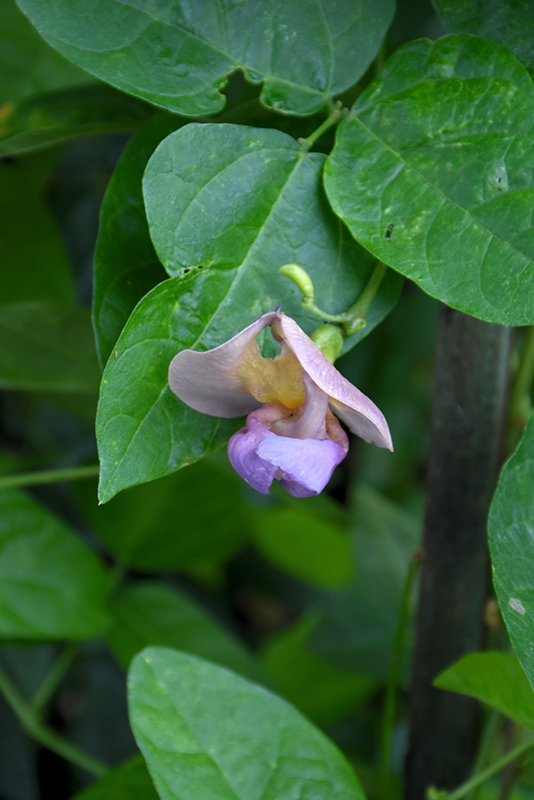
Corkscrew Flower
Description
A rapidly growing, twining vine that is evergreen in frost free climates; unique white and lilac-purple spirally twisted flowers that look like snail shells, on long racemes from summer until fall; may be aggressive in warm areas
Landscape Attributes
Corkscrew Flower is an herbaceous annual with a ground-hugging habit of growth. Its medium texture blends into the garden, but can always be balanced by a couple of finer or coarser plants for an effective composition.
Corkscrew Flower is recommended for the following landscape applications;
Planting & Growing
Corkscrew Flower will grow to be about 20 feet tall at maturity, with a spread of 3 feet. As a climbing vine, it should either be planted near a fence, trellis or other landscape structure where it can be trained to grow upwards on it, or allowed to trail off a retaining wall or slope. Although it's not a true annual, this fast-growing plant can be expected to behave as an annual in our climate if left outdoors over the winter, usually needing replacement the following year. As such, gardeners should take into consideration that it will perform differently than it would in its native habitat.
This plant does best in full sun to partial shade. It prefers to grow in average to moist conditions, and shouldn't be allowed to dry out. It is not particular as to soil type or pH. It is somewhat tolerant of urban pollution. This species is not originally from North America..
Corkscrew Flower is a fine choice for the garden, but it is also a good selection for planting in outdoor containers and hanging baskets. Because of its spreading habit of growth, it is ideally suited for use as a 'spiller' in the 'spiller-thriller-filler' container combination; plant it near the edges where it can spill gracefully over the pot. It is even sizeable enough that it can be grown alone in a suitable container. Note that when growing plants in outdoor containers and baskets, they may require more frequent waterings than they would in the yard or garden.