
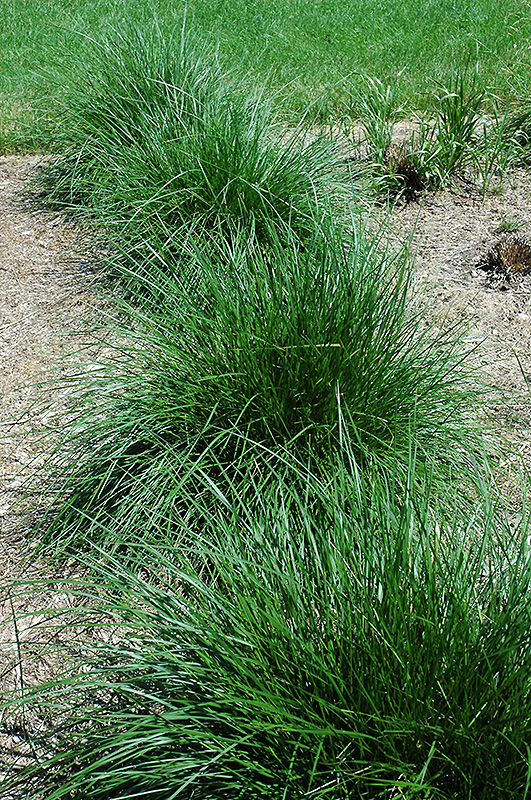
Tufted Hair Grass
Description
An easy to grow, cool season variety that features mounds of dark green, grass-like foliage with purple-green, feathery panicles rising above in the early summer months; great for adding height and texture to borders, beds and containers
Landscape Attributes
Tufted Hair Grass is an open herbaceous evergreen perennial grass with a mounded form. It brings an extremely fine and delicate texture to the garden composition and should be used to full effect.
Tufted Hair Grass is recommended for the following landscape applications;
Planting & Growing
Tufted Hair Grass will grow to be about 24 inches tall at maturity extending to 3 feet tall with the flowers, with a spread of 24 inches. Its foliage tends to remain dense right to the ground, not requiring facer plants in front. It grows at a medium rate, and under ideal conditions can be expected to live for approximately 10 years. As an evegreen perennial, this plant will typically keep its form and foliage year-round.
This plant does best in full sun to partial shade. It prefers to grow in average to moist conditions, and shouldn't be allowed to dry out. It is not particular as to soil type, but has a definite preference for acidic soils. It is somewhat tolerant of urban pollution. Consider applying a thick mulch around the root zone in winter to protect it in exposed locations or colder microclimates. This species is not originally from North America. It can be propagated by division.
Tufted Hair Grass is a fine choice for the garden, but it is also a good selection for planting in outdoor pots and containers. Because of its height, it is often used as a 'thriller' in the 'spiller-thriller-filler' container combination; plant it near the center of the pot, surrounded by smaller plants and those that spill over the edges. It is even sizeable enough that it can be grown alone in a suitable container. Note that when growing plants in outdoor containers and baskets, they may require more frequent waterings than they would in the yard or garden.