
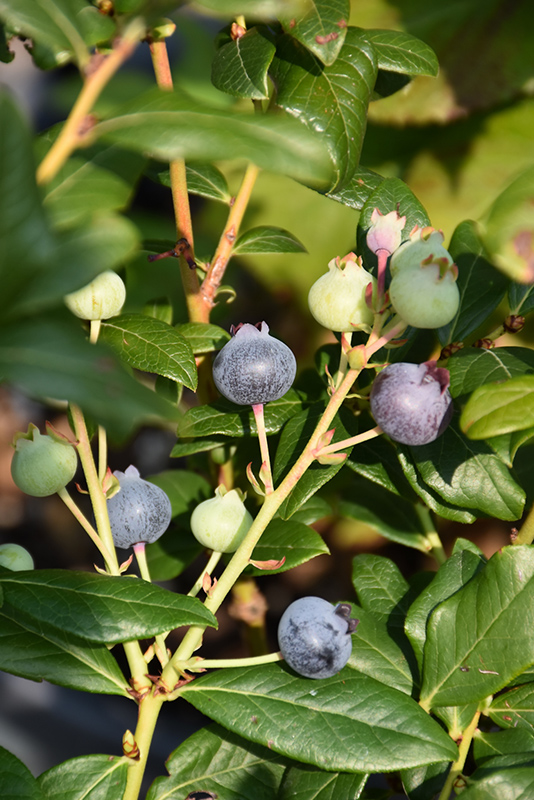
Perpetua® Blueberry
Description
This selection produces two crops of delicious blueberries, first in mid-summer, then will flower and set fruit again in fall; great for the landscape or patio containers
Planting & Growing
Perpetua® Blueberry will grow to be about 5 feet tall at maturity, with a spread of 4 feet. It tends to be a little leggy, with a typical clearance of 1 foot from the ground, and is suitable for planting under power lines. It grows at a medium rate, and under ideal conditions can be expected to live for approximately 30 years. This variety requires a different selection of the same species growing nearby in order to set fruit.
This shrub is typically grown in a designated area of the yard because of its mature size and spread. It does best in full sun to partial shade. It does best in average to evenly moist conditions, but will not tolerate standing water. It is very fussy about its soil conditions and must have sandy, acidic soils to ensure success, and is subject to chlorosis (yellowing) of the foliage in alkaline soils. It is quite intolerant of urban pollution, therefore inner city or urban streetside plantings are best avoided, and will benefit from being planted in a relatively sheltered location. Consider applying a thick mulch around the root zone in winter to protect it in exposed locations or colder microclimates. This particular variety is an interspecific hybrid.
Perpetua® Blueberry is a good choice for the edible garden, but it is also well-suited for use in outdoor pots and containers. Because of its height, it is often used as a 'thriller' in the 'spiller-thriller-filler' container combination; plant it near the center of the pot, surrounded by smaller plants and those that spill over the edges. It is even sizeable enough that it can be grown alone in a suitable container. Note that when grown in a container, it may not perform exactly as indicated on the tag - this is to be expected. Also note that when growing plants in outdoor containers and baskets, they may require more frequent waterings than they would in the yard or garden.