
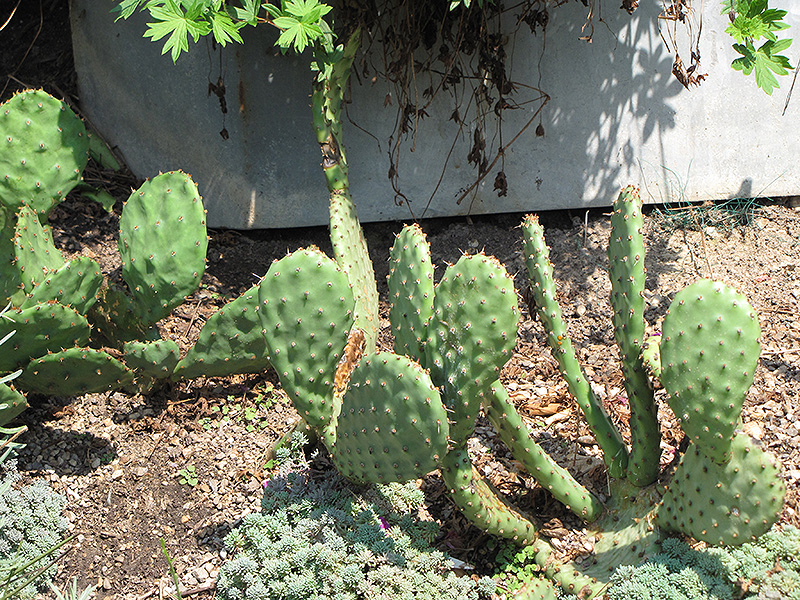
Beavertail Prickly Pear Cactus
Description
Interesting oval, gray-green pads are blushed with purple; vibrant fuchsia flowers in spring; the pads are mostly spineless with some near the top but the pads are protected by dark-brown glochids which will penetrate the skin; this plant is edible
Landscape Attributes
Beavertail Prickly Pear Cactus is a succulent evergreen plant with an upright spreading habit of growth. As a type of cactus, it has no true foliage; the body of the plant is wholly comprised of a linked series of spiny grayish green pads which are connected together to form the branches of the plant.
Beavertail Prickly Pear Cactus is recommended for the following landscape applications;
Planting & Growing
Beavertail Prickly Pear Cactus will grow to be about 24 inches tall at maturity, with a spread of 4 feet. It grows at a medium rate, and under ideal conditions can be expected to live for approximately 20 years.
This plant should only be grown in full sunlight. It requires an extremely dry, well-drained growing location, and will usually die in standing water. It is considered to be drought-tolerant, and thus makes an ideal choice for a low-water garden or xeriscape application. Like most succulents and cacti, this plant prefers to grow in poor soils and should therefore never be fertilized. It is not particular as to soil pH, but grows best in sandy soils. It is quite intolerant of urban pollution, therefore inner city or urban streetside plantings are best avoided. This species is native to parts of North America.
Beavertail Prickly Pear Cactus is a fine choice for the garden, but it is also a good selection for planting in outdoor pots and containers. With its upright habit of growth, it is best suited for use as a 'thriller' in the 'spiller-thriller-filler' container combination; plant it near the center of the pot, surrounded by smaller plants and those that spill over the edges. It is even sizeable enough that it can be grown alone in a suitable container. Note that when growing plants in outdoor containers and baskets, they may require more frequent waterings than they would in the yard or garden. Be aware that in our climate, this plant may be too tender to survive the winter if left outdoors in a container. Contact our experts for more information on how to protect it over the winter months.