
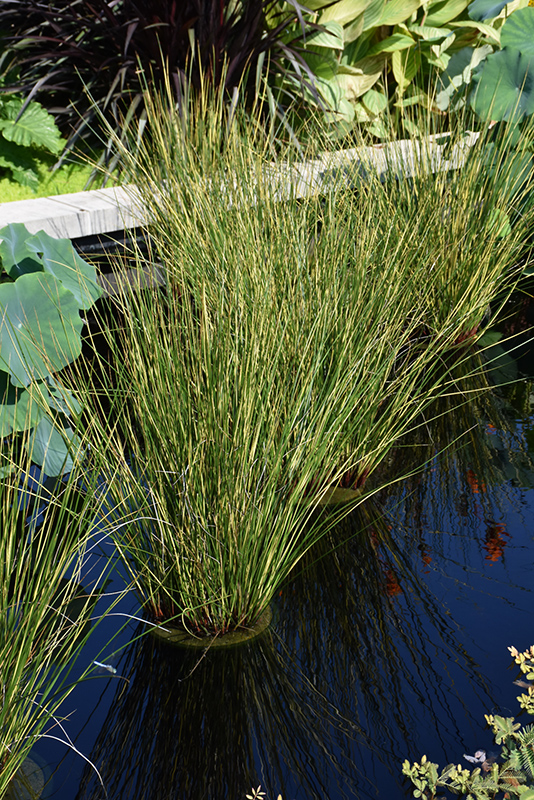
Gold Strike Common Rush
Description
An attractive selection, featuring smooth, upright blades with gold stripes that run the length of them; grows in spreading clumps; well suited to aquatic containers and boggy, poorly drained areas; great water garden or pond accent; yellow fall color
Landscape Attributes
Gold Strike Common Rush is an open herbaceous perennial grass with an upright spreading habit of growth. Its relatively fine texture sets it apart from other garden plants with less refined foliage.
Gold Strike Common Rush is recommended for the following landscape applications;
Planting & Growing
Gold Strike Common Rush will grow to be about 3 feet tall at maturity, with a spread of 24 inches. Its foliage tends to remain dense right to the ground, not requiring facer plants in front. It grows at a fast rate, and under ideal conditions can be expected to live for approximately 8 years. As an herbaceous perennial, this plant will usually die back to the crown each winter, and will regrow from the base each spring. Be careful not to disturb the crown in late winter when it may not be readily seen!
This plant does best in full sun to partial shade. It prefers to grow in moist to wet soil, and will even tolerate some standing water. It is not particular as to soil type, but has a definite preference for acidic soils, and is able to handle environmental salt. It is highly tolerant of urban pollution and will even thrive in inner city environments. This is a selection of a native North American species.
Gold Strike Common Rush is a fine choice for the garden, but it is also a good selection for planting in outdoor pots and containers. With its upright habit of growth, it is best suited for use as a 'thriller' in the 'spiller-thriller-filler' container combination; plant it near the center of the pot, surrounded by smaller plants and those that spill over the edges. It is even sizeable enough that it can be grown alone in a suitable container. Note that when growing plants in outdoor containers and baskets, they may require more frequent waterings than they would in the yard or garden.