
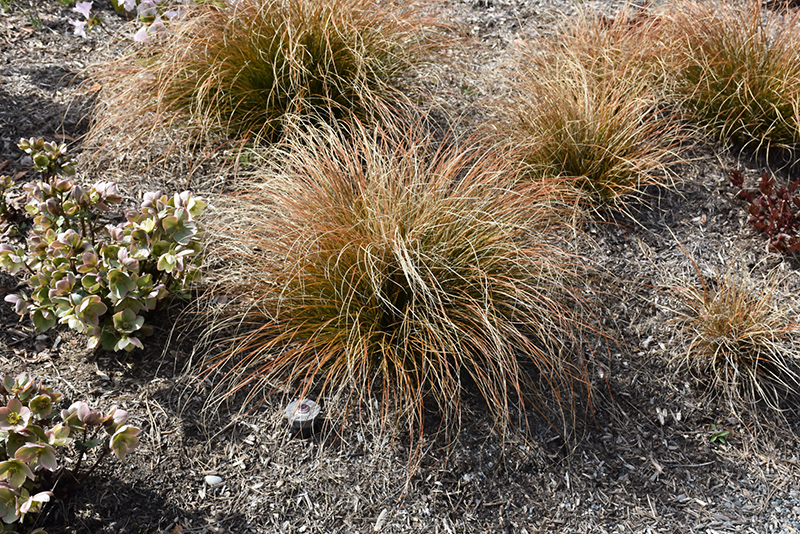
New Zealand Hair Sedge
Description
Ornamental olive green foliage, turning coppery shades in summer, adding warm, orange tints into fall and winter; great in a moist border in shade or sun, does not like to dry out; more orange in full sun locations
Landscape Attributes
New Zealand Hair Sedge is an herbaceous evergreen perennial grass with a shapely form and gracefully arching stems. It brings an extremely fine and delicate texture to the garden composition and should be used to full effect.
New Zealand Hair Sedge is recommended for the following landscape applications;
Planting & Growing
New Zealand Hair Sedge will grow to be about 24 inches tall at maturity, with a spread of 24 inches. Its foliage tends to remain dense right to the ground, not requiring facer plants in front. It grows at a medium rate, and under ideal conditions can be expected to live for approximately 7 years. As an evegreen perennial, this plant will typically keep its form and foliage year-round.
This plant does best in full sun to partial shade. It does best in average to evenly moist conditions, but will not tolerate standing water. It is not particular as to soil type or pH. It is somewhat tolerant of urban pollution. This species is not originally from North America. It can be propagated by division.
New Zealand Hair Sedge is a fine choice for the garden, but it is also a good selection for planting in outdoor pots and containers. It can be used either as 'filler' or as a 'thriller' in the 'spiller-thriller-filler' container combination, depending on the height and form of the other plants used in the container planting. It is even sizeable enough that it can be grown alone in a suitable container. Note that when growing plants in outdoor containers and baskets, they may require more frequent waterings than they would in the yard or garden. Be aware that in our climate, this plant may be too tender to survive the winter if left outdoors in a container. Contact our experts for more information on how to protect it over the winter months.